The 6 Pillars of Holistic Health: Why There's No Magic Bullet for Women Over 50
If there's one thing I've learned after years of working with women navigating the complex health challenges that come after 50, it's this – there is no single magic bullet when it comes to health.
I see it all the time. Women come to me frustrated, having tried every trending diet, supplement, or wellness hack they've heard about on podcasts or seen on social media. They've followed the latest influencer's advice, counted calories religiously, or attempted the newest restrictive eating plan, only to find themselves right back where they started – or sometimes even worse off than before.
You can eat the cleanest diet in the world, but if your stress is through the roof or you're only sleeping 4 hours a night, your body is still going to struggle. This isn't a failure on your part – it's simply how our bodies work. We're complex, interconnected systems, not machines that respond to single inputs.
That's why approaching health from a holistic perspective is so important. It's not about quick fixes – it's about building a strong foundation that supports your body for years to come. And honestly? This foundation becomes even more critical as we age, especially for women over 50 who are dealing with shifting hormones, changing metabolism, and the accumulated stress of decades of life.
Why the "One Thing" Approach Fails Women Over 50
Before we dive into what actually works, let's talk about why so many approaches fail. Most people don't know how 'crappy' they actually feel until they start feeling better. When you've been operating on low energy, poor sleep, and digestive discomfort for months or years, it becomes your new normal. You adapt, you push through, and you start believing that feeling tired, bloated, or "off" is just part of getting older.
The diet industry loves to sell us the idea that there's one secret solution – cut carbs, drink this shake, take that supplement, follow this 30-day program. But here's the truth: your body doesn't exist in isolation. Your hormones talk to your gut bacteria. Your sleep quality affects your blood sugar. Your stress levels impact your digestion. Everything is connected.
For women over 50, this interconnectedness becomes even more apparent. Hormonal changes during perimenopause and menopause don't just affect hot flashes – they influence energy levels, weight distribution, sleep patterns, mood, and digestive health. Trying to address just one piece of this puzzle while ignoring the rest is like trying to fix a leaky roof by painting over the water stains.
The Foundation of Lasting Health: 6 Key Pillars That Work Together
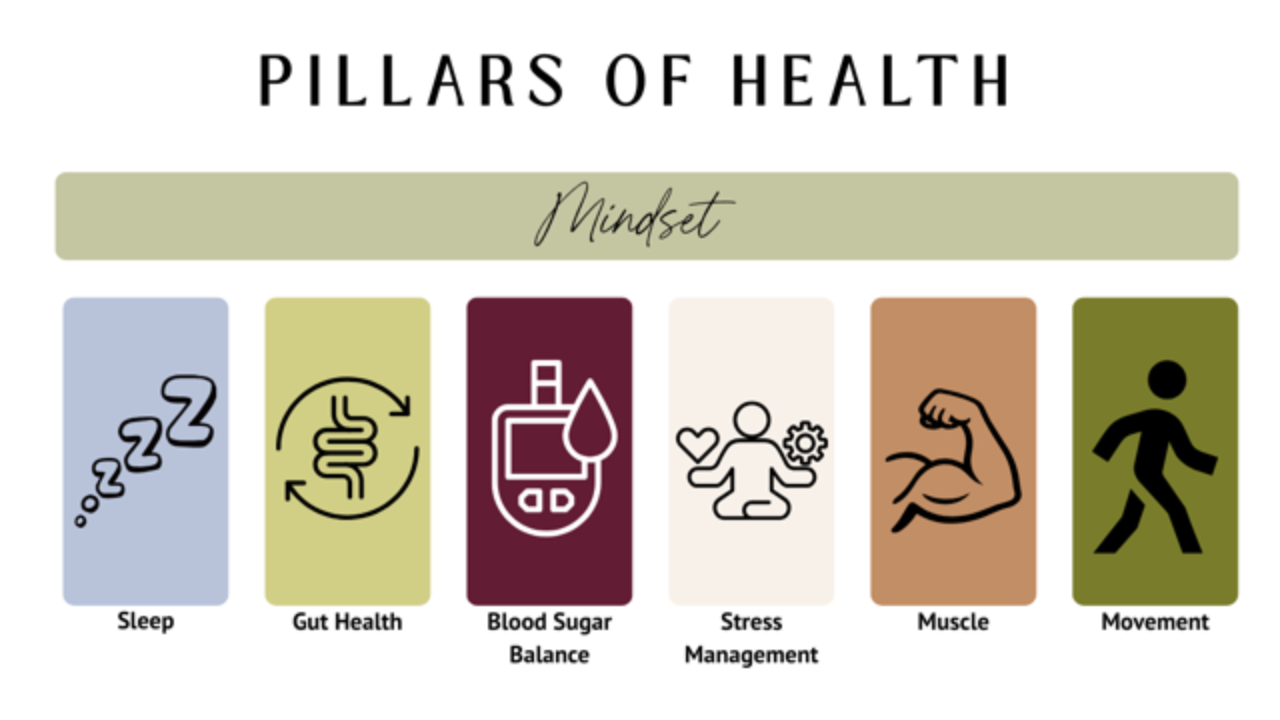
The foundation of your health is built on 6 key pillars that work together like puzzle pieces. When you understand how these pieces fit together and support each other, you can finally stop searching for that elusive magic bullet and start building the vibrant health you deserve.
Pillar 1: Blood Sugar Balance – Your Energy's Best Friend
Blood Sugar Balance isn't just about preventing diabetes – it's about feeling stable, energized, and in control of your cravings throughout the day.
When your blood sugar swings up and down, so does your energy, mood, and cravings. Keeping it steady gives your body the stable foundation it needs for hormone balance, metabolism, and even clearer thinking. For women over 50, blood sugar stability becomes even more crucial because our insulin sensitivity can change with age and hormonal shifts.
Think of blood sugar like the thermostat in your home. When it's working properly, you barely notice it. The temperature stays comfortable and consistent. But when it's broken, you're constantly too hot or too cold, never quite comfortable, and your energy goes toward managing the discomfort instead of living your life.
Stable blood sugar means you can go hours between meals without getting hangry, you don't crash at 3 PM reaching for caffeine or sugar, and you can make clear-headed decisions about food instead of being driven by cravings. It also supports better sleep, more balanced hormones, and sustainable weight management.
The beautiful thing about blood sugar balance is that it doesn't require a restrictive diet. It's about timing, pairing foods strategically, and understanding how different foods affect your individual body. Simple steps like eating protein with every meal, not skipping breakfast, and choosing whole foods over processed ones can make a dramatic difference in how you feel day to day.
Pillar 2: Muscle – Your Metabolic Powerhouse
Muscle isn't just for looks, and it's definitely not just for younger people or athletes. It keeps your metabolism strong, protects your bones, helps regulate blood sugar, and helps you stay active and independent as you age.
Here's what many women don't realize: starting around age 30, we naturally lose muscle mass at a rate of 3-5% per decade, and this loss accelerates during menopause. This isn't just an aesthetic concern – it's a health concern. Muscle tissue is metabolically active, meaning it burns calories even when you're resting. Less muscle means a slower metabolism, which can contribute to that frustrating weight gain many women experience in their 50s and beyond.
But muscle does so much more than burn calories. It acts like a glucose disposal system, helping your body use blood sugar efficiently. It provides structural support that protects your joints and bones. It improves your balance and coordination, reducing fall risk. And it gives you the strength to carry groceries, play with grandchildren, and maintain your independence.
The good news? You can build and maintain muscle at any age. You don't need to become a bodybuilder or spend hours in the gym. Resistance training just 2-3 times per week, combined with adequate protein intake, can help preserve and even build muscle mass. This might look like bodyweight exercises, resistance bands, free weights, or even activities like gardening or carrying groceries.
Pillar 3: Movement – More Than Just Exercise
Movement is about so much more than structured exercise sessions. Your body was designed to move, and this isn't about punishing workouts. It's about moving often – walking, stretching, dancing, biking, lifting weights. Daily movement boosts circulation, mood, digestion, and even brain health.
The difference between movement and exercise is important. Exercise is structured, planned, and often intense. Movement is woven throughout your day – taking the stairs, parking farther away, stretching while watching TV, dancing while cooking dinner, or taking a walk after meals.
For women over 50, consistent movement becomes especially important because it combats the natural tendency toward stiffness, maintains bone density, supports cardiovascular health, and helps manage stress. But more than that, movement is often the gateway to feeling like yourself again. There's something powerful about moving your body and remembering what it's capable of.
The key is finding movement you actually enjoy. If you hate the gym, don't force yourself to go. Maybe it's yoga in your living room, swimming at the community center, hiking with friends, or dancing to music while you clean house. When movement feels good, you're more likely to do it consistently, and consistency is what creates lasting change.
Pillar 4: Sleep – Your Body's Repair Shop
Sleep is when the magic happens. Deep, restorative sleep is when your body repairs, detoxifies, and resets. Skimping on it doesn't just make you tired – it impacts hormones, appetite, blood sugar, and resilience to stress.
Quality sleep affects every other pillar of health. Poor sleep disrupts the hormones that regulate hunger and satiety, making you more likely to crave sugary, high-calorie foods. It impairs glucose metabolism, making blood sugar management more difficult. It reduces motivation for movement and exercise. It increases cortisol levels, contributing to chronic stress. And it compromises immune function, making you more susceptible to illness.
For women over 50, sleep challenges often intensify. Hormonal changes can cause night sweats, frequent waking, or difficulty falling asleep. Stress from work, family responsibilities, or life transitions can keep your mind racing when your head hits the pillow.
But good sleep isn't just about quantity – it's about quality. Creating a sleep environment that supports rest, establishing consistent bedtime routines, managing light exposure, and addressing underlying issues like stress or digestive discomfort can dramatically improve sleep quality even if you can't always control the quantity.
Pillar 5: Stress Management – Calming the Storm
Stress management is perhaps the most underestimated pillar of health, especially for women who have spent decades putting everyone else's needs before their own.
Stress doesn't just live in your head – it creates a ripple effect throughout your body, raising inflammation, hijacking your hormones, disrupting your digestion, stressing your immune system, and more. Finding ways to calm your system and reduce stress is crucial to every area of health.
Chronic stress keeps your body in a state of fight-or-flight, which was designed for short-term emergencies, not the ongoing pressures of modern life. When you're constantly stressed, your body prioritizes immediate survival over long-term health functions like digestion, immune response, and tissue repair.
For women over 50, stress management becomes even more important because we're often dealing with multiple stressors simultaneously – caring for aging parents, supporting adult children, managing career transitions, navigating health changes, and adjusting to shifting relationships.
Effective stress management doesn't mean eliminating all stress from your life (which would be impossible anyway). It means building resilience and finding healthy ways to process and respond to stress. This might include practices like deep breathing, meditation, journaling, spending time in nature, setting boundaries, or simply giving yourself permission to rest without guilt.
Pillar 6: Gut Health – Your Second Brain
Gut health is the foundation that supports all other aspects of wellness. Your gut is home to trillions of microbes that influence digestion, inflammation, mood, immunity, and even weight. When your gut is thriving, the rest of your body follows suit. Taking care of it pays off in every area of your health.
Your gut does far more than digest food. It produces neurotransmitters that affect mood and mental clarity. It houses about 70% of your immune system. It communicates directly with your brain through what scientists call the gut-brain axis. It influences hormone production and metabolism.
For women over 50, gut health often becomes more noticeable as digestive issues that might have been minor annoyances in younger years become more persistent. Bloating after meals, irregular bowel movements, food sensitivities, or that uncomfortable feeling of food "sitting like a rock" in your stomach can significantly impact quality of life.
Supporting gut health doesn't necessarily require expensive supplements or complicated protocols. It starts with simple strategies like eating a variety of fiber-rich foods, staying adequately hydrated, managing stress (which directly impacts digestion), chewing food thoroughly, and being mindful of how different foods make you feel.
The Power of Integration: Why These Pillars Must Work Together
When you focus on these pillars together – not in isolation – you create the kind of lasting health that diets, detoxes, and "hacks" can never deliver. This is where the real transformation happens.
Here's a real-life example of how these pillars support each other: When you prioritize sleep, you have more energy for movement. When you move regularly, you manage stress better and sleep more soundly. When you manage stress, your digestion improves and your blood sugar stays more stable. When your gut is healthy, you absorb nutrients better, which supports muscle maintenance and energy production. It's all connected.
This interconnected approach is especially important for women over 50 because our bodies are already managing significant changes. Hormonal shifts, changing metabolism, and the accumulated effects of decades of stress mean we need a more comprehensive approach than we might have needed in our 20s or 30s.
Many women tell me they feel like their body "betrayed" them somewhere along the way. They remember feeling strong, energetic, and confident, and they can't understand why everything feels so much harder now. The truth is, your body hasn't betrayed you – it's responding to everything it's been asked to handle. When we address health holistically, we give our bodies the support they need to function optimally again.
The Mindset Factor: The Missing Piece Most Programs Ignore
And here's where mindset comes in – the often-overlooked seventh pillar that makes everything else possible.
My clients aren't just learning about these pillars – they're cultivating a positive mindset that allows them to take consistent action and see results. Because here's what I've observed over and over: you can have the perfect plan, but if your thoughts are working against you, that plan will never stick.
Knowledge creates power, action builds confidence, and your thoughts drive the choices you make every single day.
The women I work with have often spent years thinking thoughts like "I'm too old," "It's too late for me," "I don't have willpower," or "My body just doesn't work right anymore." These thoughts, while understandable given their experiences, become self-fulfilling prophecies that sabotage even the best intentions.
Mindset work isn't about toxic positivity or pretending everything is fine when it's not. It's about recognizing the stories you tell yourself about your body, your capabilities, and your potential, and choosing thoughts that actually serve you. It's about developing self-compassion instead of self-criticism. It's about focusing on progress over perfection and celebrating small wins instead of focusing on how far you still have to go.
Why This Approach Works When Others Have Failed
If you're reading this and thinking, "But I've tried everything," I want you to know that your past experiences don't predict your future results. Most approaches fail because they focus on one pillar while ignoring the others, or they demand perfection instead of progress.
The holistic approach works because it meets you where you are and builds from there. Instead of overhauling your entire life overnight, you make small, sustainable changes in each area that compound over time. Instead of fighting against your body, you learn to work with it.
This is especially important for women over 50 who often feel like they've "failed" at health because previous attempts didn't stick. You didn't fail – you were using an incomplete approach. When you address all the pillars together, you're not just changing surface-level behaviors; you're creating the conditions for your body to naturally return to better health.
Getting Started: Small Steps, Big Results
The beauty of this approach is that you don't need to tackle everything at once. In fact, trying to perfect all six pillars simultaneously is a recipe for overwhelm and burnout. Instead, you can start with small, manageable steps in each area and build momentum over time.
Keep the process as simple as possible. Complexity is the enemy of consistency, and consistency is what creates lasting change. You are never too old or too late to start taking better care of yourself.
Remember, progress is built on simple steps done often, not perfect habits done occasionally. Small wins become big change when you give them time to compound.
The Ripple Effect of Holistic Health
When you start supporting your body holistically, the changes go beyond what you might expect. Women tell me they not only lose weight and have more energy, but they also feel more confident making decisions, have better relationships, and approach challenges with more resilience.
This makes sense when you understand that your physical health and mental well-being are inseparable. When your body feels good, your mind follows. When you're sleeping well, moving regularly, and managing stress effectively, you show up differently in every area of your life.
You start trusting yourself again. You begin to believe that you can make promises to yourself and keep them. You remember what it feels like to feel like yourself – energized, capable, and alive.
Your Health Is Worth the Investment
You deserve to feel strong, confident, and energized – not just for today, but for all the years ahead. The investments you make in your health now will pay dividends in your 60s, 70s, and beyond. The energy you cultivate today will help you stay engaged with your children and grandchildren. The strength you build now will help you maintain independence later. The habits you establish today will become the foundation for lifelong vitality.
This isn't about vanity or trying to turn back the clock – it's about optimizing the body you have right now so you can live fully in the years ahead. It's about feeling proud of your body and confident in your skin, no matter what age is listed on your driver's license.
Your health journey doesn't have to be complicated, restrictive, or overwhelming. It can be a series of small, sustainable steps that honor where you are right now while moving you toward where you want to be.
Stay connected with news and updates!
Join our mailing list to receive the latest news and updates from our team.
Don't worry, your information will not be shared.
We hate SPAM. We will never sell your information, for any reason.